MORE on kaleidoscope city
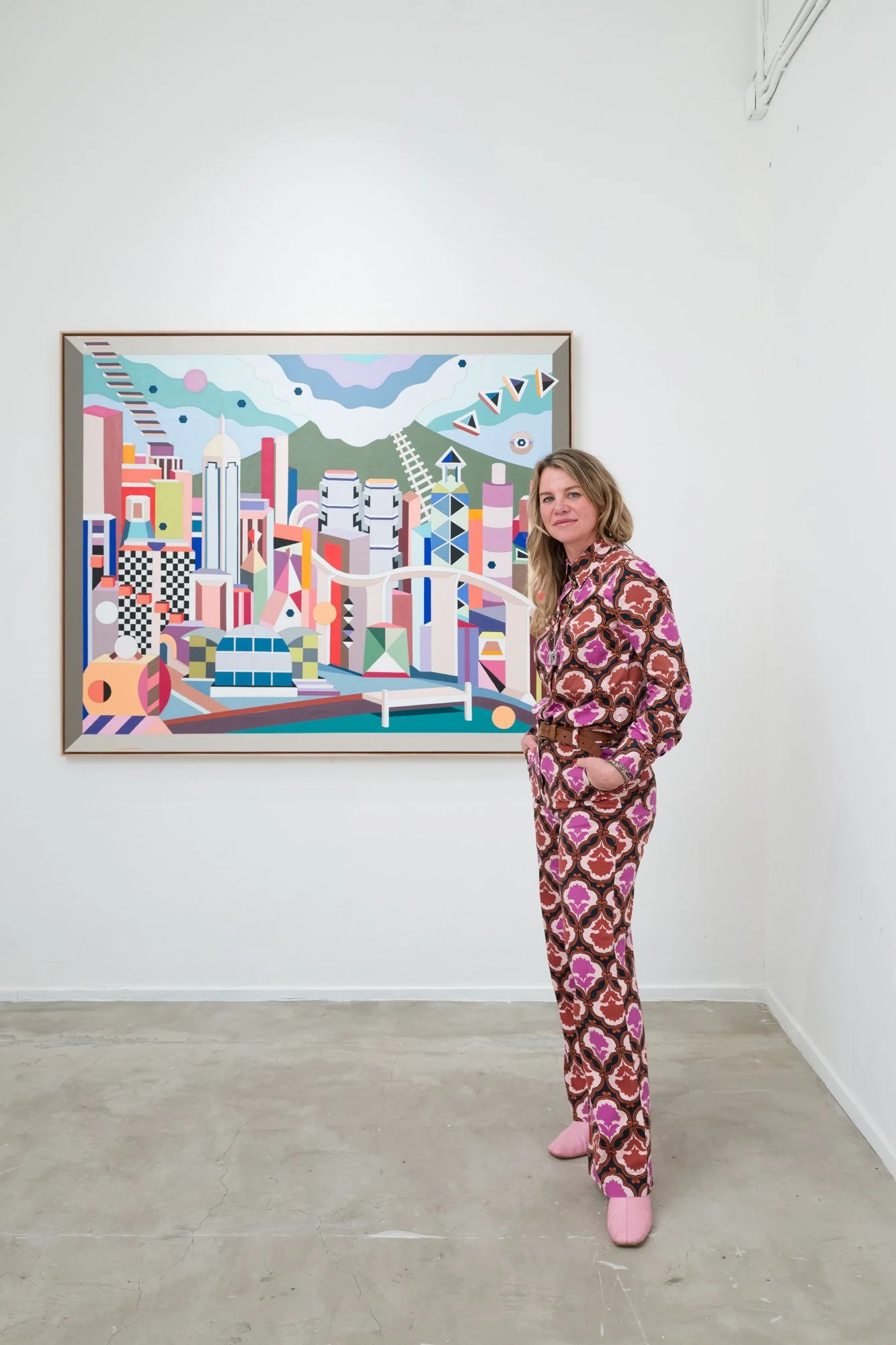
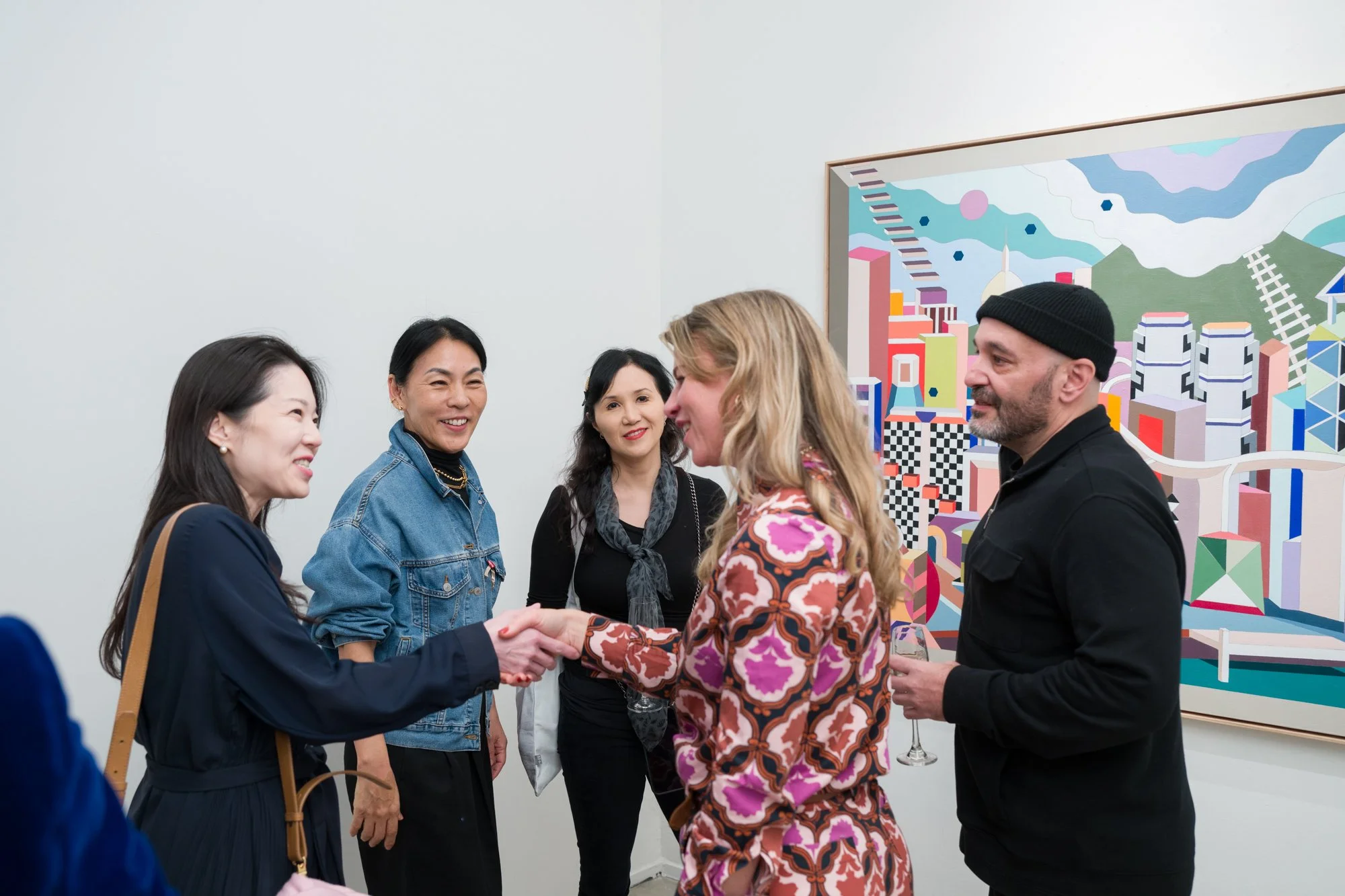
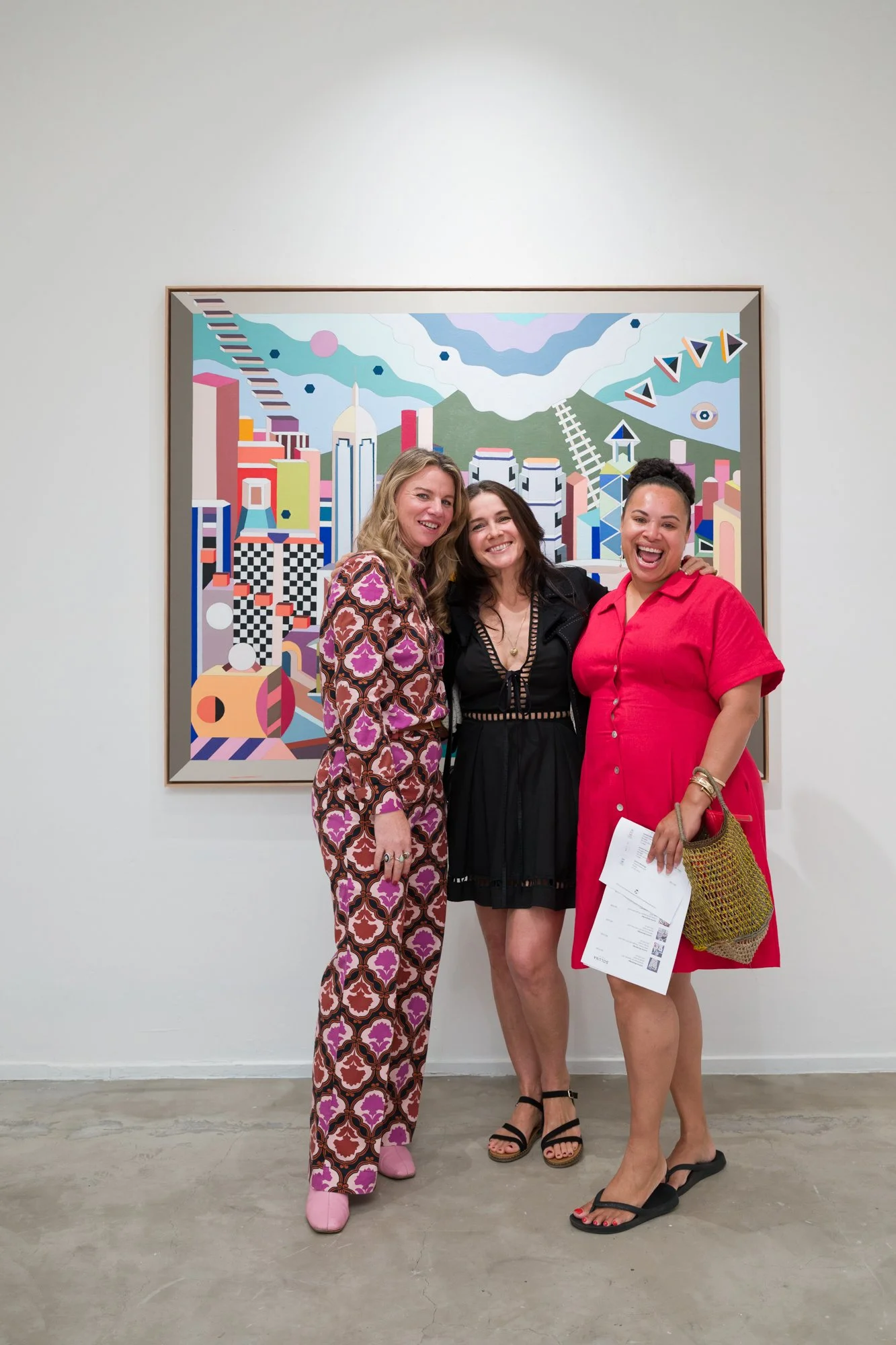
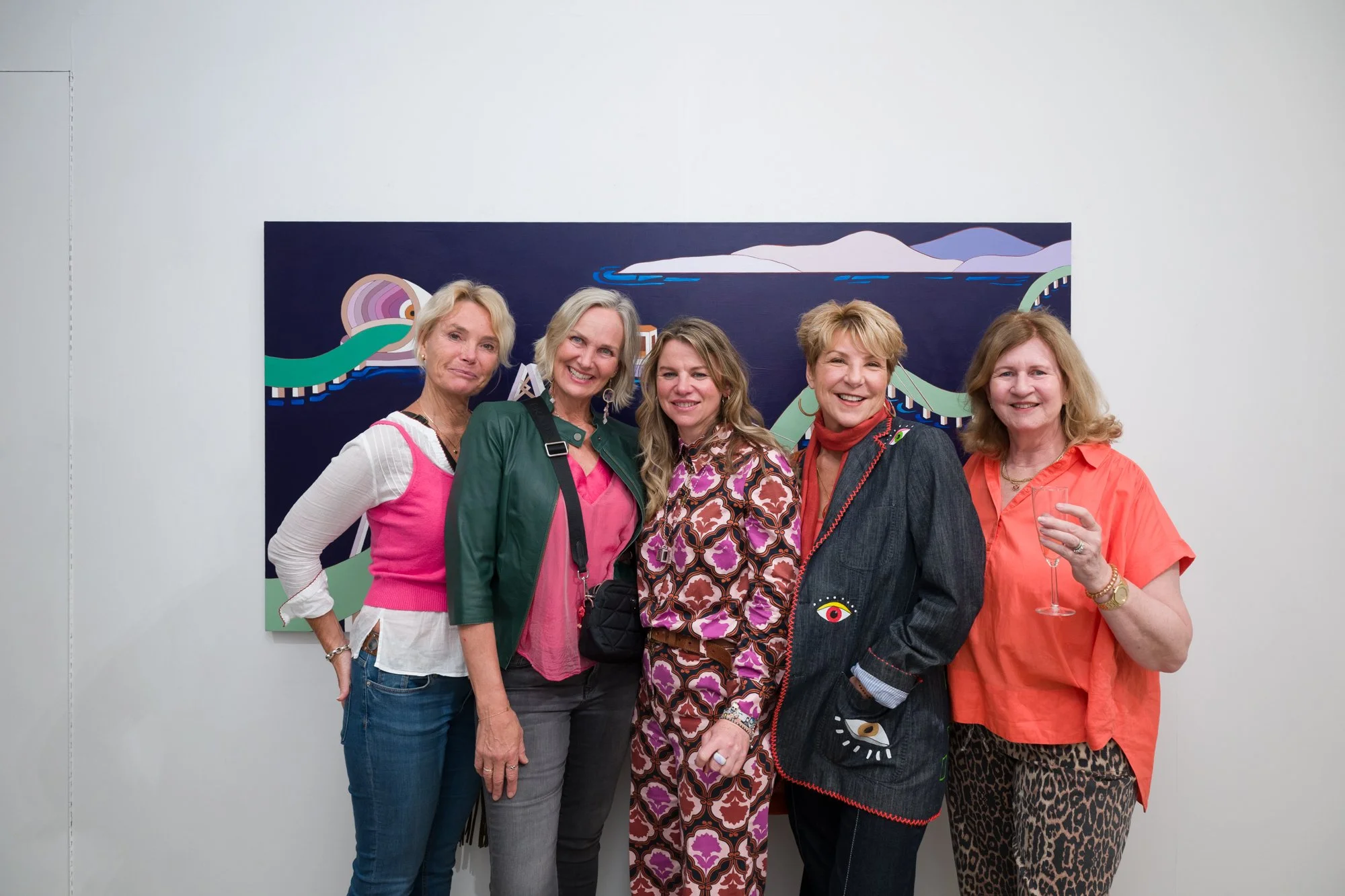
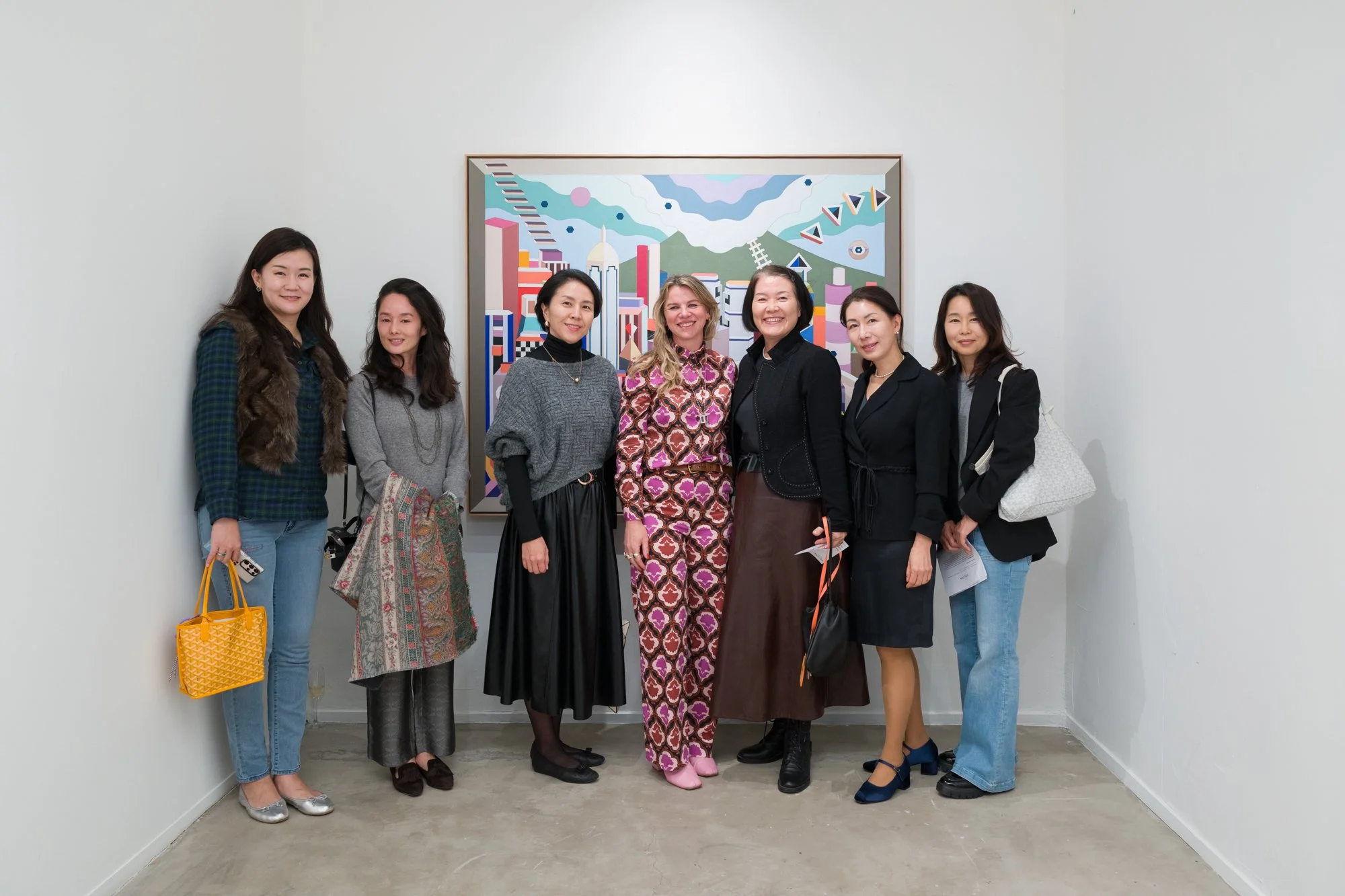
Dropping a line here to say thank you to everyone involved in the successful opening of KALEIDOSCOPE CITY at the Soluna Fine Art Gallery in Hong Kong.
It was wonderful to celebrate with dear friends and to introduce new people to my practice. The exhibition runs through until the 17th of January 2026.
Kirsten Lacy, who I met in Hong Kong during art fair week when she was the Director of the Auckland Gallery has written me the most beautiful essay which I have shared below. She has come to know me and my practice so well and I feel has summed all up so succinctly.
For all catalogue and other enquiries, please contact the Gallery directly via this link, or via following details; SOLUNA FINE ART
G/F, 52 Sai Street, Sheung Wan
+852 2955 5166 contact@solunafineart.com
Gallery Hours: Tuesday - Saturday
10:00 am – 6:00 pm
(Closed on Public Holidays)
Jasmine Mansbridge: Kaleidoscope City
Jasmine Mansbridge has developed a painterly language that is both structurally rigorous and also transportive. Her works do not mimic the world; they construct coherent spatial propositions—architectures of colour and geometry that viewers step into rather than observe. In Kaleidoscope City, Hong Kong becomes the latest site through which her spatial language unfolds. The city’s verticality, density and improbable beauty are not depicted but distilled—translated into geometric structures that hold movement, memory and projection in equal measure. These works reaffirm Mansbridge as a painter deeply engaged with the psychological and spiritual dimensions of space, and with the archetypal architectures we carry within us.
Mansbridge’s visual vocabulary is the outcome of a sustained and disciplined practice. Over two decades, she has refined a language of forms—stairs, arches, platforms, bridges, open planes—that function as structural and symbolic devices. Her geometry is not decorative; it is conceptual architecture. Planes behave like supports, lines like vectors of intention, colour like atmosphere. There is a coherence to her compositions that speaks to an artist who understands both the discipline of structure and the necessity of allowing space for intuitive openness. This balance between rigour and spaciousness is one of the defining characteristics of her mature work.
Hong Kong offers a compelling context for this evolution. It is a city built on thresholds and transitions: between land and sea, mountain and skyline, tradition and futurity. For years, Mansbridge has returned to Hong Kong with curiosity and attunement, observing how its spatial density generates a distinct psychological rhythm. Rather than replicating the city’s forms, she extracts its dynamics—its vertical momentum, its layered viewpoints, its constant negotiation between structure and improvisation. In these new paintings, Hong Kong’s spatial logic is transformed into imagined architectures that feel grounded in the city’s energy while also existing apart from its physical reality.
This relationship between real place and imagined space is central to her practice. Mansbridge builds worlds that possess their own internal logic. Viewers enter them instinctively, navigating pathways, ascending steps, or pausing before an open expanse of shifting colour. These journeys are not literal; they are cognitive, emotional, and, at times, spiritual. The act of moving through these constructed spaces mirrors the experience of navigating contemporary urban life—especially in a city like Hong Kong, where density and complexity require constant internal orientation. Free-hand drawn and self-taught, the human dimension is ever present in the built architectural landscapes evoked.
One of the more distinctive qualities of Mansbridge’s work, and one that becomes particularly resonant in this exhibition, is its spiritual undercurrent. This is not spirituality expressed through figurative symbolism or overt narratives; it arises through structure, balance and the invitation to stillness within complexity. Her paintings function as meditative architectures—quiet spaces in which viewers can experience a sense of alignment, contemplation or elevation. The spiritual dimension is embedded in the compositional logic: the harmony of colour, the clarity of form, the deliberate use of archetypal structures such as arches, circles and ascending pathways.
These archetypal forms, long associated across cultures with ideas of passage, wholeness and transcendence, appear in her compositions not as symbols to decode, but as intuitive spatial anchors. They operate at the level of resonance rather than reference. A staircase suggests inner ascent as much as physical movement. A bridge becomes a metaphor for connection—between states of mind, or between the material and the metaphysical. Circular forms echo ideas of completeness or return. The presence of these archetypes in Mansbridge’s work speaks to her interest in how humans orient themselves within both built and imagined structures.
Hong Kong, in this sense, becomes more than a geographical location; it becomes a catalyst for exploring how contemporary urban dwellers negotiate spirituality within environments defined by acceleration, density and fragmentation. Mansbridge’s paintings offer an alternative mode of navigation—slower, more deliberate, attuned to inner architectures rather than external demands. In a city where vertical expansion often eclipses the horizon, her compositions propose new forms of spaciousness. They create room for viewers to re-encounter clarity, balance and presence.
Colour plays a critical role in shaping this atmosphere. Mansbridge’s palette is carefully calibrated: softened pastels, grounded neutrals, punctuating moments of saturated tone. Her chromatic decisions are purposeful. Colour becomes an organising force that structures perception and emotion simultaneously. It is through colour that she introduces luminosity into her architectural forms—light not as a literal source, but as an animating presence. Within the context of Hong Kong’s reflective surfaces and shifting maritime light, her palette resonates as a distilled interpretation of the city’s atmospheric qualities.
The sophistication of Mansbridge’s spatial thinking situates her practice within a broader international conversation about the intersection of architecture, psychology and contemporary painting. Across global contexts, artists are increasingly engaging with space as a site of emotional and metaphysical inquiry. Mansbridge contributes to this discourse with a clarity that is distinctively her own. Her work offers a pathway into understanding how imagined environments can function as tools for psychological orientation—a way of navigating the internal landscapes shaped by external complexities.
The metaphysical dimension of her work is most evident in the way her compositions generate presence. She creates spaces that invite grounding and spaciousness simultaneously—a rare combination. What she calls “connection to source” is not presented as doctrine but as an experiential quality of the paintings themselves. The viewer encounters an environment composed with such clarity and intention that a sense of coherence emerges naturally. These works gesture toward the possibility that spirituality in contemporary life may be found not in escape from the world, but in cultivating clarity within it.
Kaleidoscope City demonstrates the full maturity of Mansbridge’s artistic language. The works are more layered, more spatially complex, and more confident in their ability to hold multiple levels of meaning. They reflect an artist who understands the demands of contemporary life yet resists its fragmentation, offering instead structures of stillness, expansiveness and possibility. They reveal how painting—when handled with precision and attentiveness—can operate as both a mirror and a compass.
Ultimately, this exhibition presents a vision of Hong Kong—and of contemporary existence—filtered through an artist for whom clarity, presence and connection are essential forces. In Mansbridge’s hands, geometry becomes a pathway, colour becomes atmosphere, and space becomes a site of alignment. These paintings do not provide answers; they offer conditions for contemplation. They invite viewers to enter, to breathe, to orient themselves, and to recognise the architectures they carry within.
By articulating a spatial language that is simultaneously architectural, psychological and spiritual, Jasmine Mansbridge affirms her place as a significant contemporary painter with an increasingly international resonance. Kaleidoscope City is not a departure but a deepening—an expansion of her visual and metaphysical thinking into new terrain, and a confident assertion of a practice that continues to evolve with clarity, purpose and imaginative ambition.
Kirsten Lacy
5 December 2025